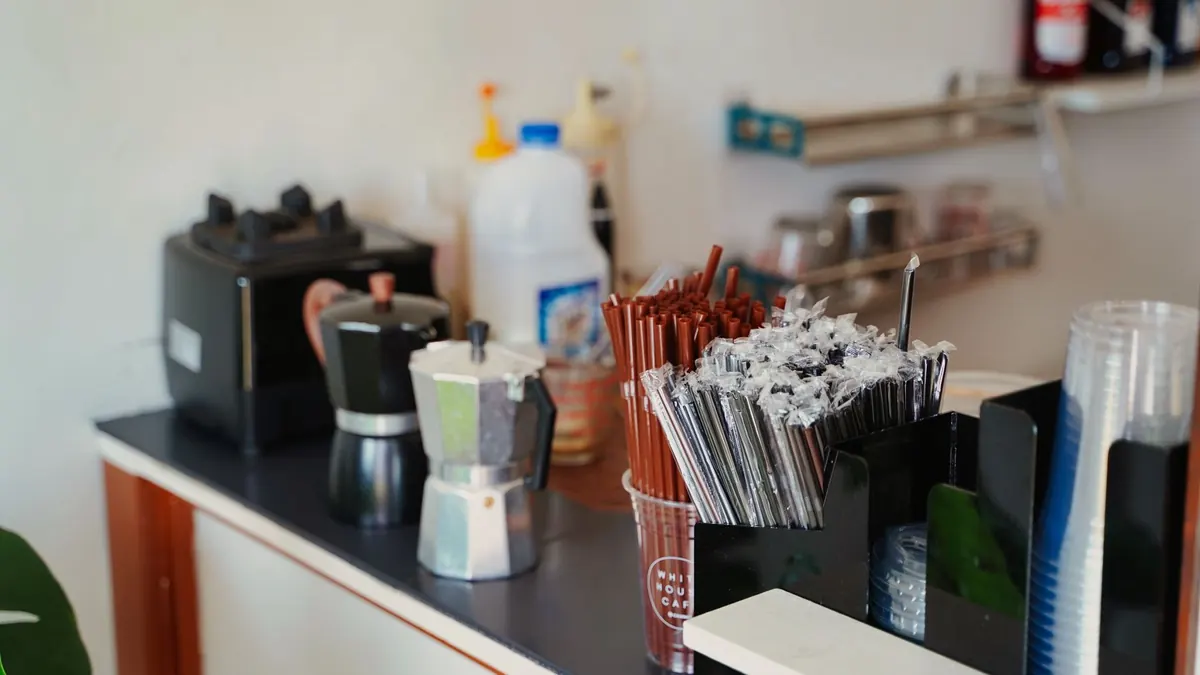
The bar is loud at 8:40 on a Tuesday morning. A man in a suit drinks an espresso in three seconds, sets the cup down, and is gone before you have decided what you want. Someone else is paying at a register near the door. Nobody is waiting to be seated, and nobody is holding a paper cup. This is not a café in the sense you may be used to. It is a fuel stop with excellent taste, and it runs on a handful of unwritten rules that are easy to learn and almost impossible to guess.
In Italy, a bar is where you go for coffee in the morning, a pastry standing up, a glass of wine at noon, a sandwich at one, and a shot of something stronger after dinner. The word covers all of it. So don't look for a menu of twelve latte sizes, and don't hover near the door waiting to be greeted. Walk in, look towards the counter, and join it.
Most bars have two distinct zones: the banco, where you stand, and the tables, sometimes a small room at the back or a handful of chairs spilling onto the pavement. They are not the same product at the same price. The pastry case usually sits by the register, and in many places you order your cornetto there rather than at the coffee machine. If you are unsure, watch what the person in front of you does. It takes about ten seconds to understand the layout.
Drinking coffee on your feet is the default, and it is not a quirk. It keeps the bar moving during the morning rush, it keeps the price low, and it is simply how the day is structured. You order, you drink, you pay, you leave. Two minutes, sometimes less.
Sitting down changes the transaction. Table service usually carries a surcharge, and in the most heavily visited squares the gap between counter and table can be startling for the same small cup. There is no trick to it, just a different service with a different price list. If the number matters to you, ask before you sit, or take the counter seat and spend the difference on lunch. Bars that serve at the table will normally bring you a menu with table prices; bars that don't will tell you so without drama.
One piece of manners worth knowing: once you have your cup, step away from the counter if the bar is busy. The space in front of the register belongs to the next three people in line.
You have probably heard that Italians don't drink cappuccino after lunch. It is not a law, and no one will arrest you, but it is a strong convention, and you will notice a pause if you order one at four in the afternoon. The logic is simple enough: a large cup of milk is a meal in itself, and an espresso is what you drink to close a meal and get back to work.
So the pattern is this. Milk-heavy drinks before eleven, ideally with breakfast and ideally with something to eat. From mid-morning onwards, the order narrows to espresso and its close relatives: a macchiato with a stain of milk, a caffè shakerato in the heat of summer, a marocchino in Turin, a ginseng coffee if you are in the north. Nobody minds a visitor ordering a cappuccino at any hour, and many baristas will serve it without comment. But you will feel less like a tourist and more like a local if you adapt.
The whole exchange is short, which is exactly why it can feel intimidating. Have it in your head before you reach the counter.
Tipping is not expected in the way it is in some countries. Leaving small change or dropping a coin in the jar by the register is a friendly gesture, not an obligation, and nobody will chase you down the street.
Here is the part that catches most visitors. In many bars you pay at the register first, take the scontrino (the receipt), and then hand it to the barista at the counter as your order. In others, you order and drink first and pay on the way out. Both are normal, and both exist within the same city, sometimes on the same street.
Look for the register near the door, or for a queue forming nowhere near the coffee machine. If you cannot tell, ask: Si paga prima o dopo? Nobody will think less of you. Keep the receipt until you leave, since in some bars a small check at the door is part of the routine. If you are paying by card, it is still worth knowing the price before you order, especially at a table.
Vocabulary does more work here than grammar. Learn six terms and you can order almost anything you actually want.
A takeaway cup is increasingly possible in Italian cities, but it is still not the norm, and asking for one in a small neighbourhood bar may get a shrug rather than a lid. If you need to sit, sit, but take the table price seriously. Bathrooms are usually for customers, and a coin or a small purchase is the courteous way in. Newspapers on wooden sticks belong to the bar, and reading one while standing with your espresso is a legitimate use of ten minutes.
One last thing worth knowing: the caffè sospeso, a Neapolitan tradition in which you pay for two coffees and drink one, leaving the other for a stranger who cannot afford it. If you see the phrase on a chalkboard, that is what it means. Order one if you like. It is a small, quiet custom and it tells you something about how these places work.
Five things worth remembering, in order: greet the barista, order an espresso rather than "a coffee", drink it at the counter, keep your receipt, and save the cappuccino for the morning. If you want to sit, ask the price first. If you don't know how the bar works, watch the person ahead of you for ten seconds. And don't rush the drink itself, even if everyone around you finishes in one swallow. The bar is fast, but the coffee is meant to be good.
Photo: phiraphon srithakae / Pexels