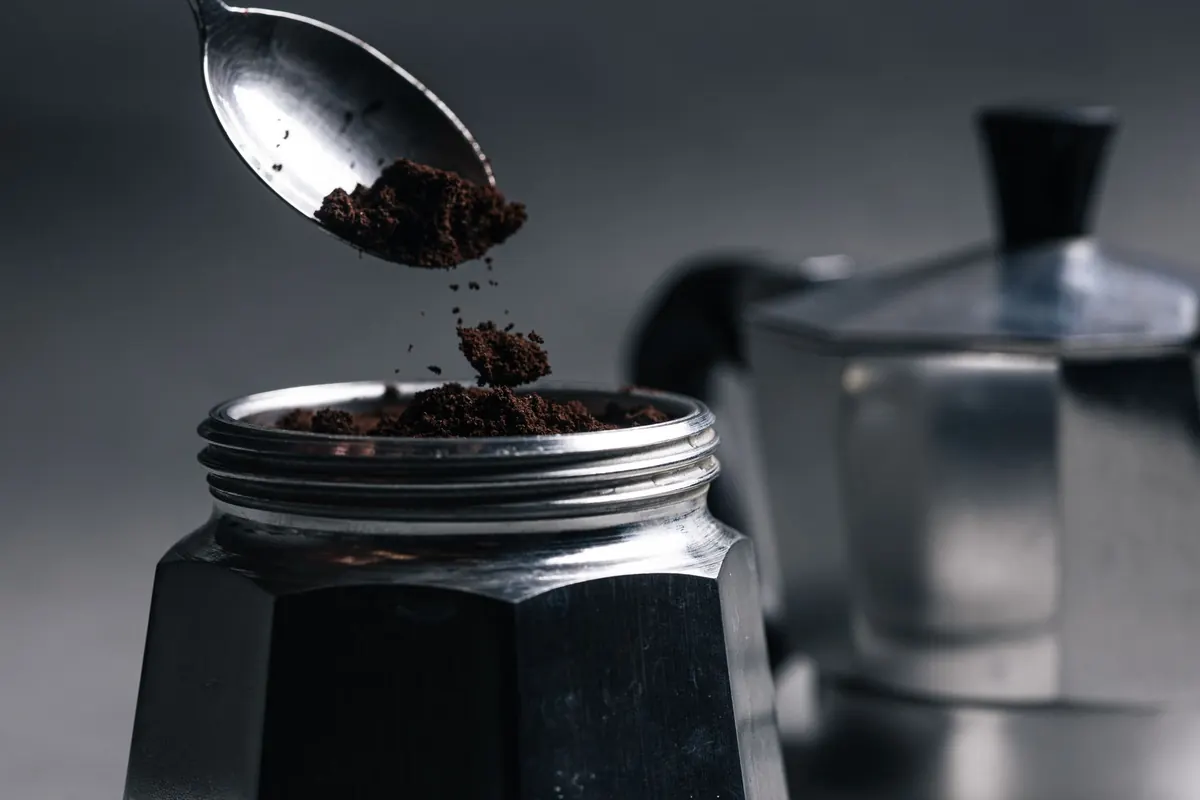
A moka pot is one of the few coffee tools that rewards use rather than punishing it. The more you brew, the more settled it feels in the hand. But it only stays that way if you clean it kindly. Attack it with steel wool and you will dull the finish permanently. Put it away wet and the gasket turns sour within a week. The good news is that a real clean takes about five minutes, needs nothing you don't already own, and keeps the aluminium looking the way it did the day you unboxed it. Here is the whole routine, from the first rinse to the last twist of the top chamber.
Three jobs get muddled together: washing, descaling and polishing. They happen on different schedules and use different tools. Washing is the everyday rinse-and-sponge job. Descaling is the occasional mineral cleanup, maybe every few weeks to a couple of months depending on how hard your water is. Polishing is cosmetic and entirely optional.
It also helps to know what your pot is made of. Most classic moka pots are aluminium; some are stainless steel; a few have painted or coated exteriors that scratch if you look at them wrong. Aluminium is the fussiest of the three. It reacts with strong acids and alkalis, darkens in the dishwasher and marks easily if you scrub with anything abrasive. Stainless is more forgiving but still has a gasket and a finish worth protecting.
One thing worth saying plainly: a dark, even patina inside the boiler of an aluminium pot is normal. It is oxidised coffee oil, not dirt, and it is harmless. Some people chase a spotless interior and end up scouring the metal thin in the process. A gentle wash is enough.
You need very little. Gather this before you start so you are not hunting for a brush with soapy hands:
And these four should never touch the pot:
Never start on a hot pot. Beyond the obvious burn risk, running cold water over hot aluminium can warp it, and a warped base will not sit flat on the hob again. Let it cool on the counter while you drink the coffee.
Soak the top chamber in warm water for ten minutes, then ease the gasket out with your thumbs. Do not lever it with a knife or a screwdriver — you will nick the rim, and a nicked rim means steam escaping where it shouldn't. If the gasket has hardened, cracked or gone chalky, replace it. They are cheap and usually last somewhere between six months and a couple of years depending on use.
Rinse the pot as soon as you have finished your coffee. Dried grounds set like cement in the funnel holes, and cleaning them out later takes ten times the effort.
Skip the inside of the boiler if you can. A quick rinse and a wipe is plenty. There is no need to scrub it white, and every hard scrub takes a little metal with it.
Scale shows up as a pale, chalky crust inside the boiler and on the funnel. You may notice the brew getting slower, the sputter more erratic, or a faint metallic edge in the cup. That is the moment to descale — not before.
Fill the boiler with warm water, add a teaspoon or two of citric acid, and reassemble the pot without coffee. Set it on low heat until it just starts to push water through, then take it off and let it sit for ten to fifteen minutes. Pour it out, then run one plain water brew to flush the pot. Keep the soak short on aluminium; long acid baths dull the surface.
White vinegar works too. Mix one part vinegar with two or three parts water, soak the parts for fifteen to twenty minutes, then rinse generously. Expect a vinegar smell for a brew or two — it fades.
Bicarbonate of soda is better for deodorising and lifting light stains than for dissolving scale. A paste of bicarb and water applied with a soft cloth will deal with a stained exterior nicely. Just don't leave it sitting on the metal for long, and rinse it off completely.
This is the step most people rush, and it is the one that decides whether your pot smells of coffee or of damp cupboard.
Two habits are worth building alongside this. Never fill the boiler past the safety valve, and never press or tamp the coffee in the funnel — a packed basket raises the pressure and stresses the gasket. Medium heat, lid open, and a pot that is clean and dry will give you a sweeter, more consistent brew than any amount of fancy coffee.
Treat the moka pot like a good pan: rinse it while it is still warm, wash it gently, dry it properly, and give it a descale when it starts to complain. That is the whole secret. No specialty cleaners, no scrubbing, no drama. Do this and the finish will stay intact for years, the gasket will last longer, and the coffee will taste like coffee instead of last week's coffee. Start with the next pot you brew — the difference shows up in the very first cup.
Photo: Bastian Riccardi / Pexels